
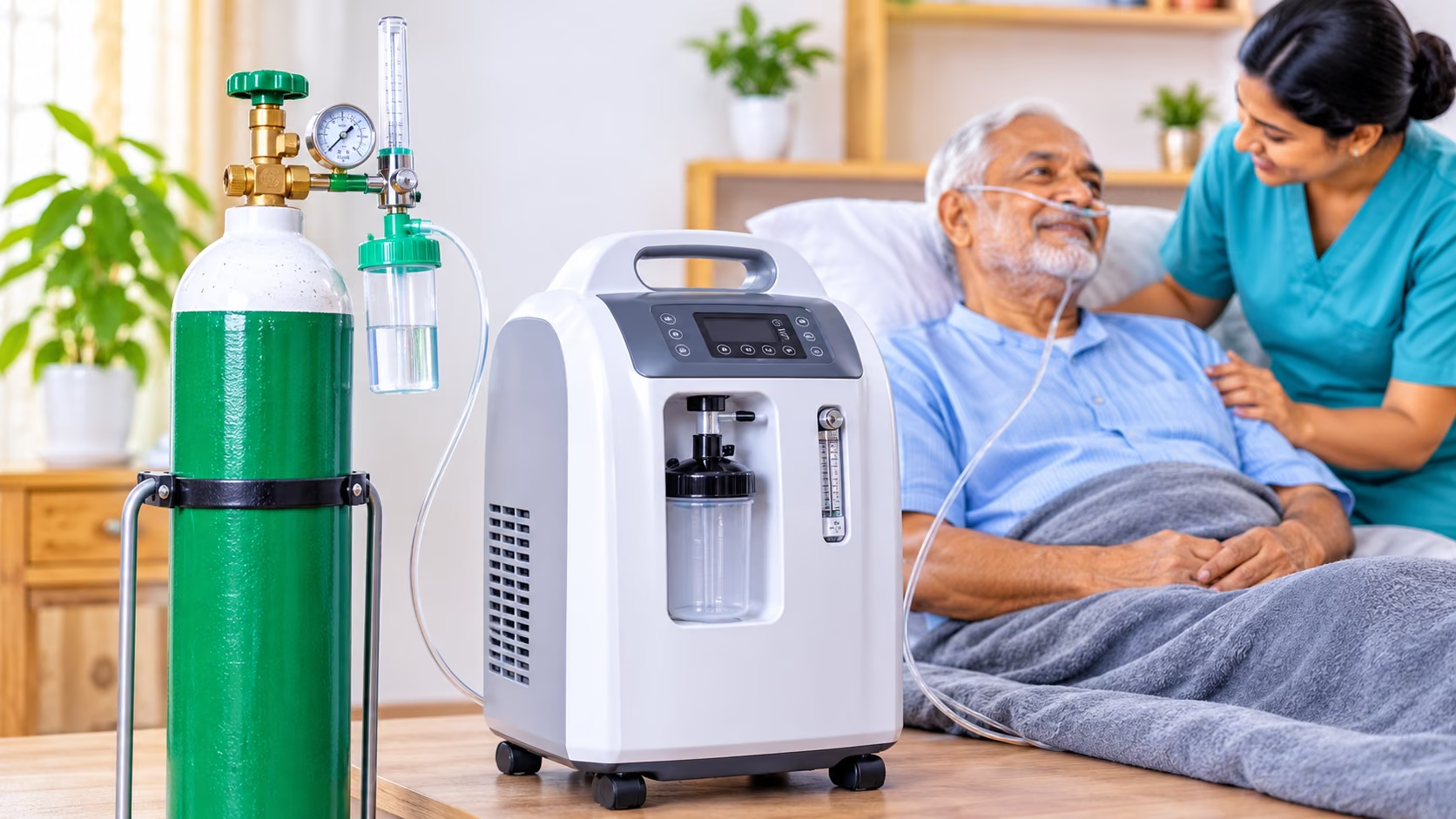
Choosing between an oxygen cylinder and an oxygen concentrator can be challenging, especially when arranging oxygen therapy for a patient at home. Both devices provide supplemental oxygen, but they work differently and offer different benefits.
An oxygen cylinder stores compressed oxygen, while an oxygen concentrator takes oxygen from the surrounding air and delivers concentrated oxygen to the patient. The right choice depends on the patient’s oxygen requirements, medical condition, daily activities, budget, and home environment.
In this guide, we will explain the differences between an oxygen cylinder and an oxygen concentrator, compare their costs and features, and help you understand which option may be suitable for home oxygen therapy in Bangladesh.
1. What Is an Oxygen Cylinder?
An oxygen cylinder is a medical device that stores oxygen gas under high pressure. It supplies oxygen to patients through a regulator, flow meter, and oxygen delivery accessories such as a nasal cannula or face mask.
Oxygen cylinders are commonly used in hospitals, ambulances, emergency situations, and homes. They are available in different sizes depending on oxygen capacity and usage requirements.
Key Features of an Oxygen Cylinder:
- Stores medical-grade oxygen for immediate use.
- Does not require electricity to release oxygen.
- Available in different sizes and capacities.
- Provides oxygen at prescribed flow rates.
- Requires refilling or replacement when the oxygen runs out.
- Can be used as a backup oxygen supply during power outages.
2. What Is an Oxygen Concentrator?
An oxygen concentrator is an electrically powered medical device that takes in surrounding air, removes most of the nitrogen, and delivers concentrated oxygen to the patient.
Unlike an oxygen cylinder, it does not store oxygen in a tank. Instead, it continuously produces concentrated oxygen while connected to a working power source.
Oxygen concentrators are commonly used for patients who need long-term oxygen therapy at home.
Key Features of an Oxygen Concentrator:
- Produces concentrated oxygen from surrounding air.
- Does not require regular oxygen refilling.
- Requires electricity or a compatible battery-powered system.
- Available in different oxygen flow capacities.
- Suitable for many patients requiring long-term oxygen therapy.
- Requires regular maintenance and filter cleaning.
3. Oxygen Concentrator vs Cylinder: Key Differences
Understanding the differences between these two devices can help you make a more informed decision.
| Comparison Factor | Oxygen Cylinder | Oxygen Concentrator |
|---|---|---|
| Oxygen source | Compressed oxygen | Concentrated oxygen from surrounding air |
| Electricity | Not required | Required for most home models |
| Oxygen supply | Limited stored supply | Continuous while powered and functioning |
| Refilling | Requires regular refilling | No regular oxygen refilling |
| Portability | Portable options available | Portable and stationary models available |
| Maintenance | Regulator and cylinder checks | Filter cleaning and servicing |
| Running cost | Oxygen refilling and transportation | Electricity and maintenance |
| Power outage | Can continue supplying oxygen | Requires backup power |
| Best suited for | Short-term use and backup supply | Many long-term home oxygen therapy needs |
Both devices can provide prescribed oxygen therapy. However, their suitability depends on the patient’s medical needs and the equipment’s capabilities. NHS+2
4. Advantages and Disadvantages of Oxygen Cylinders
Before choosing an oxygen cylinder, consider its benefits and limitations.
Advantages
- Immediate oxygen supply: Provides stored medical oxygen when needed.
- No electricity required: Works without a direct electrical connection.
- Emergency backup: Useful during power outages or concentrator failure.
- Different sizes: Available in different capacities for various requirements.
- Portable options: Smaller cylinders can be transported when necessary.
Disadvantages
- Limited oxygen supply: The cylinder eventually runs out of oxygen.
- Refilling costs: Regular refilling increases ongoing expenses.
- Transportation: Large cylinders can be difficult to move.
- Storage requirements: Cylinders need secure and appropriate storage.
- Supply management: Families must monitor oxygen levels and arrange refills before the supply runs out.
5. Advantages and Disadvantages of Oxygen Concentrators
Oxygen concentrators offer several benefits for patients who require oxygen for extended periods.
Advantages
- Continuous oxygen production: Produces concentrated oxygen while operating correctly.
- No regular refilling: Does not need to be refilled like a cylinder.
- Convenient for home use: Many models are designed for continuous operation.
- Long-term convenience: Reduces the need for repeated oxygen deliveries.
- Different models: Available in stationary and portable versions.
Disadvantages
- Electricity dependency: Most home concentrators require a continuous power supply.
- Initial investment: Purchasing a reliable machine can involve a higher upfront cost.
- Regular maintenance: Filters and other components require proper care.
- Operating noise: Some models produce noticeable sound.
- Limited output: Each machine has a maximum oxygen flow and concentration capacity.
Remember that not every concentrator is suitable for every patient. The machine must meet the prescribed oxygen flow and delivery requirements. Oxygen Therapy+1
6. Which Is More Cost-Effective: Oxygen Cylinder or Concentrator?
Cost is an important consideration when choosing between an oxygen concentrator and an oxygen cylinder in Bangladesh.
However, the cheaper option initially may not always be the most economical over time.
Oxygen Cylinder Costs
The total cost of using an oxygen cylinder may include:
- Initial cylinder purchase or rental.
- Oxygen refilling charges.
- Transportation and delivery fees.
- Regulator and accessories.
- Additional cylinders for backup.
If a patient needs oxygen throughout the day, frequent refilling can increase the overall expense.
Oxygen Concentrator Costs
The total cost of an oxygen concentrator may include:
- Initial purchase or rental charges.
- Monthly electricity bills.
- Filter replacement and servicing.
- Accessories and oxygen tubing.
- Backup power arrangements.
Although a concentrator may require a higher initial investment, it can reduce repeated oxygen refilling expenses for suitable long-term users.
Which Is More Affordable?
For patients requiring oxygen for extended periods, a suitable oxygen concentrator may be more cost-effective over time. However, the final cost depends on the machine’s price, electricity consumption, prescribed flow rate, maintenance requirements, and duration of use.
7. Which Device Is Better for Home Oxygen Therapy?
The right choice depends on how much oxygen the patient needs and how long they need it.
Choose an Oxygen Concentrator When:
- The patient needs oxygen for several hours daily.
- Long-term oxygen therapy has been prescribed.
- A reliable electricity supply is available.
- Regular cylinder refilling is inconvenient.
- The patient’s prescribed oxygen requirements match the machine’s capacity.
Choose an Oxygen Cylinder When:
- Oxygen is needed for a short period, as prescribed.
- A portable oxygen supply is required.
- The patient needs an emergency backup supply.
- Electricity is unavailable or unreliable.
- A suitable concentrator cannot meet the patient’s oxygen requirements.
Can You Use Both Devices Together?
Yes. In some home oxygen therapy arrangements, families use an oxygen concentrator as the primary source and keep an oxygen cylinder as a backup.
This arrangement can be useful during power outages, equipment problems, or situations when the patient needs a different oxygen delivery system.
However, a healthcare professional should determine the appropriate backup arrangement and explain how to switch between devices safely.
8. Important Factors to Consider Before Buying or Renting
Before purchasing or renting an oxygen cylinder or concentrator, consider the following factors:
1. Patient’s Oxygen Requirements
Consult a doctor to determine the required oxygen flow rate, oxygen concentration, and duration of therapy.
2. Electricity Availability
If you choose an oxygen concentrator, ensure that your home has a reliable electricity supply. Consider a suitable backup power solution.
3. Duration of Oxygen Therapy
For patients requiring long-term oxygen therapy, a suitable concentrator may offer greater convenience. For short-term requirements, a cylinder may be more appropriate.
4. Budget
Compare the initial purchase or rental cost with ongoing expenses, including electricity, refilling, transportation, and maintenance.
5. Portability
If the patient needs to travel or move outside the home, consider a suitable portable oxygen cylinder or portable oxygen concentrator.
6. Machine Capacity
Check the machine’s oxygen concentration and maximum flow rate. Make sure its specifications match the patient’s prescription.
7. Oxygen Safety Tips for Home Use
Oxygen therapy requires careful handling because oxygen-enriched environments increase fire risks.
Follow these important safety precautions:
- Never smoke near oxygen equipment.
- Keep oxygen devices away from flames, gas stoves, and heat sources.
- Store oxygen cylinders upright and secure them properly.
- Keep the concentrator in a well-ventilated location.
- Avoid using oil-based products near oxygen equipment.
- Check the equipment and tubing regularly.
- Follow the manufacturer’s maintenance instructions.
- Never change the prescribed oxygen flow rate without medical advice.
- Keep an appropriate backup oxygen supply if recommended by your healthcare provider.
These precautions apply to both oxygen cylinders and concentrators.
10. Frequently Asked Questions (FAQs)
1. Which is better, an oxygen concentrator or an oxygen cylinder?
Neither device is universally better. An oxygen concentrator is often convenient for suitable patients requiring long-term oxygen therapy, while an oxygen cylinder can be useful for short-term oxygen requirements and emergency backup. The decision should follow medical advice.
2. Can an oxygen concentrator replace an oxygen cylinder?
Yes, for many patients, an appropriately selected oxygen concentrator can replace a cylinder as their primary home oxygen source. However, it cannot replace every cylinder-based oxygen requirement. The patient’s prescribed flow rate and clinical condition must be considered.
3. Does an oxygen concentrator need electricity?
Yes. Most home oxygen concentrators require electricity to operate. Some portable models also support rechargeable batteries. A backup power arrangement may be necessary in areas with frequent power interruptions.
4. How long can an oxygen cylinder last?
The duration depends on the cylinder’s size, available oxygen pressure, and prescribed flow rate. A larger cylinder generally lasts longer than a smaller one at the same flow rate.
5. Is an oxygen concentrator suitable for continuous use?
Many stationary oxygen concentrators are designed for extended operation. However, suitability depends on the device specifications and the patient’s medical requirements. Follow the manufacturer’s instructions and your doctor’s advice.
6. Can I use an oxygen concentrator during a power outage?
A standard home oxygen concentrator cannot operate without electricity. A compatible backup battery or power system may help, but an appropriately prepared oxygen cylinder can provide an alternative supply.
7. Is renting an oxygen concentrator better than buying one?
Renting may be more practical when oxygen therapy is needed temporarily or when you want to avoid a large initial investment. Buying may be more economical for long-term use, depending on the total cost and maintenance requirements.
8. What should I check before renting an oxygen concentrator in Dhaka?
Before renting, check the machine’s condition, oxygen concentration, maximum flow rate, maintenance history, accessories, rental charges, and availability of technical support. Also confirm that the machine meets the patient’s prescription.
11. Final Verdict: Oxygen Concentrator vs Cylinder – Which One Should You Choose?
Choosing between an oxygen concentrator and an oxygen cylinder depends on the patient’s medical condition, oxygen requirements, lifestyle, and budget.
An oxygen concentrator can be a convenient option for patients who need long-term oxygen therapy and have access to reliable electricity. On the other hand, an oxygen cylinder can be useful for short-term oxygen needs, transportation, and emergency backup.
For many families, using a suitable oxygen concentrator as the primary oxygen source and keeping a cylinder as backup can provide additional convenience and peace of mind.
Most importantly, consult a qualified healthcare professional before selecting any oxygen equipment. Never start oxygen therapy or change the prescribed oxygen flow rate without medical guidance.
If you are arranging oxygen therapy for a family member at home in Dhaka, compare the available equipment carefully and choose a reliable medical oxygen supplier.
Need Dedicated Home Care or Nursing in Dhaka?
Get verified on-call nurses, patient attendants, and physiotherapy delivered directly to your home 24/7.